

If you or someone you love is staring down a plate feeling fear instead of hunger, you're not alone in that confusion. Food can feel like the enemy. Recovery can feel impossible to picture.
This article breaks down what nutrition therapy actually involves, its specific goals for anorexia nervosa, the phases treatment typically follows, and why pairing it with mental health counseling makes all the difference.
Key Takeaways
- Medical stabilization comes first: correcting electrolytes and preventing refeeding syndrome before full weight restoration
- Nutrition therapy tackles both physical repair and psychological healing, not just calories
- Recovery moves through distinct phases, from crisis stabilization to normalized eating
- CEDS-credentialed dietitians bring specialized, evidence-based expertise to recovery
- Nutrition therapy works best paired with trauma-informed counseling, not as a standalone fix
Understanding Nutrition Therapy for Anorexia Nervosa
Nutrition therapy, sometimes called medical nutrition therapy or nutrition counseling, is a structured, individualized process led by a registered dietitian. The Academy of Nutrition and Dietetics identifies registered dietitians as uniquely qualified to deliver this care as part of an interdisciplinary eating disorder treatment team.
This isn't generic meal planning. It's clinical work that addresses two intertwined problems at once.
Physical repair means:
- Correcting malnutrition and nutrient deficiencies
- Restoring weight to a medically appropriate range
- Stabilizing vital signs, electrolytes, and organ function
Psychological healing means:
- Challenging fear foods and rigid food rules
- Addressing body image distortions
- Rebuilding trust in hunger and fullness cues
Both tracks matter. A person can be medically stable and still terrified of a bagel. Nutrition therapy works to close that gap over time, not overnight.
What Is the First Goal of Nutrition Therapy for Anorexia Nervosa?
The first goal isn't weight gain. It's survival.
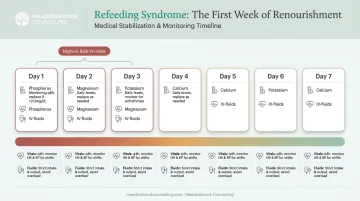
Medical stabilization and interrupting the starvation cycle take priority over everything else. This means correcting electrolyte imbalances and preventing refeeding syndrome, a potentially fatal complication that can occur when nutrition is reintroduced too quickly to a severely malnourished body.
Refeeding syndrome risk peaks during the first week of renourishment. Clinical guidelines call for daily monitoring of phosphorus, magnesium, potassium, and calcium until levels stabilize, along with careful tracking of vital signs and fluid balance, according to the American Psychiatric Association's 2023 practice guideline.
Once a patient is medically stable, the focus shifts. Treatment moves toward gradual, consistent increases in food and energy intake through an individualized meal plan, not aggressive catch-up eating.
Core Goals Across the Recovery Journey
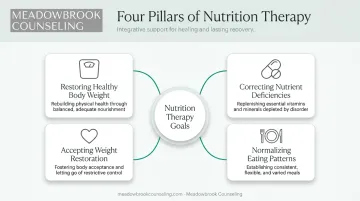
After the immediate crisis passes, nutrition therapy expands to address the fuller picture of recovery. The APA's guideline outlines several interconnected goals beyond initial stabilization.
- Restoring and maintaining a healthy body weight — individualized based on age, height, growth history, and medical status, not a one-size-fits-all BMI number
- Correcting nutrient deficiencies: zinc, vitamin D, thiamine, folate, and B12 deficiencies are commonly reported in anorexia nervosa, according to a 2021 review published in PMC
- Normalizing eating patterns and behaviors through regular meals, adequate variety, and reduced avoidance of entire food groups
- Helping the individual accept weight restoration, including regained fat and lean tissue, as a biologically necessary part of healing rather than a failure
A 2023 study in the International Journal of Eating Disorders followed 128 patients with anorexia or bulimia through intensive meal-based treatment and found that dietary variety increased and food anxiety decreased from admission to discharge. Structured nutrition intervention can genuinely shift the emotional relationship with food, not just the number on a chart.
That emotional progress needs to be matched by physical progress at a healthy pace. Lower BMI at the end of treatment has been linked to higher relapse risk, which is why these goals aren't optional add-ons.
The Nutrition Rehabilitation Process: What Nutritional Treatment for Anorexia Looks Like
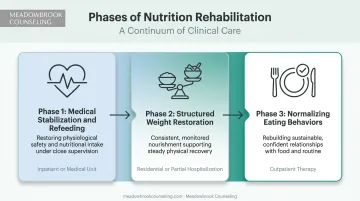
Nutritional treatment doesn't happen all at once. The body needs time to safely readjust, and treatment reflects that reality through distinct phases.
Phase 1: Medical Stabilization and Refeeding
This is the highest-risk period. Under close medical and psychiatric supervision, calories are reintroduced carefully while the team watches for refeeding syndrome symptoms, including arrhythmias, dangerous electrolyte shifts, and fluid imbalances.
Baseline bloodwork, daily lab checks, and cardiac monitoring are standard during this window. Nothing here is left to guesswork.
Phase 2: Structured Weight Restoration
Once the acute danger passes, treatment shifts toward steady, structured progress:
- Individualized meal plans, sometimes exchange-based or macronutrient-focused
- Gradual, planned increases in caloric intake
- Clinical benchmarks around 2-3 pounds weekly in inpatient settings versus 0.5-1 pound weekly outpatient, per a 2013 review in PMC
- Ongoing correction of identified nutrient deficiencies
Phase 3: Normalizing Eating Behaviors and Relationship with Food
The final phase looks less clinical and more like everyday life. The focus turns to:
- Reducing food rituals and avoidance behaviors
- Reintroducing previously feared foods gradually
- Rebuilding reliable hunger and fullness recognition
- Sustaining restored weight over time
The level of care shapes how intensively this all happens. Someone in inpatient treatment has 24-hour monitoring and supported meals, while someone in outpatient care sees their dietitian periodically and manages most meals independently. Meadowbrook Counseling's therapists work within this outpatient tier, supporting clients and coordinating with dietitians and medical providers once the higher levels of care are no longer needed.
| Level of Care | Nutrition Intensity |
|---|---|
| Inpatient | 24-hour monitoring, highest oversight of meals and labs |
| Residential | Round-the-clock structure outside a hospital setting |
| PHP/Day Treatment | Supported meals during the day, home at night |
| IOP | Several weekly contacts and supported meals |
| Outpatient | Periodic dietitian visits, most meals self-managed |
As recovery progresses, the dietitian's role shifts too, moving from crisis management to long-term, sustainable support. This is where outpatient therapy plays its most active part, helping clients maintain progress and address the emotional patterns tied to food long after acute treatment ends.
Why Nutrition Therapy Works Best Alongside Mental Health Counseling
Here's the hard truth: nutrition therapy alone can't fix anorexia nervosa. It can restore weight and correct deficiencies, but it can't untangle the trauma, anxiety, perfectionism, or body image distortions driving the illness in the first place.
That's where mental health counseling comes in, addressing what nutrition alone cannot:
- Cognitive Behavioral Therapy (CBT): Targets distorted thoughts around food and self-worth
- Dialectical Behavior Therapy (DBT): Builds emotional regulation skills for clients whose restriction is tied to distress tolerance
- EMDR: Processes the underlying traumatic experiences that often fuel disordered eating
Clinical guidelines are clear on this point: the American Psychiatric Association recommends coordinated medical, psychiatric, and nutritional expertise working together, not in isolation. A retrospective chart review supports coordinated, multidisciplinary care as the clinical standard for anorexia nervosa treatment.
Putting that standard into practice means having a counseling partner who fits into a client's broader recovery team. This is where Meadowbrook Counseling comes in. Therapists like Rosario Toral, ACMHC, an EMDR-certified clinician, provide the trauma-informed, compassionate counseling piece that complements the medical and nutritional work happening elsewhere. Meadowbrook's clinicians coordinate closely with dietitians and medical providers so counseling reinforces the nutritional progress happening elsewhere, rather than working in a silo.
Family involvement matters here too, especially for adolescents and young adults. The APA specifically recommends family-based treatment when a caregiver is available and engaged, since reinforcing nutrition rehabilitation progress at home strengthens what happens in sessions.
Can a Nutritionist Help with Anorexia? What to Expect in Sessions
Yes. Registered dietitians specializing in eating disorders use evidence-based methods to correct malnutrition and rebuild food trust, one meal at a time.
A typical session might include:
- Reviewing eating patterns since the last visit, including any skipped meals or fear-food avoidance
- Nutrition education tailored to the client's specific deficiencies or misconceptions
- Addressing fear foods through gradual, collaborative exposure
- Goal-setting for the coming week, adjusted based on medical status and readiness
Since these sessions require specific clinical training, choosing the right provider matters.
Nutritionist vs. Registered Dietitian: Know the Difference
Not everyone calling themselves a "nutritionist" has the same training, and that gap can affect the quality of care a client receives.
- RDN/RD credentials require a graduate degree, accredited education through ACEND, supervised practice hours, and a passing score on the Commission on Dietetic Registration exam
- The title "nutritionist" alone doesn't guarantee any of that, since regulation varies by state
- Eating-disorder specialization adds another layer: look for the Certified Eating Disorder Specialist (CEDS) credential, which requires at least 2,500 hours of eating disorder experience over 24 months, per IAEDP's certification standards
If you're vetting a provider, ask directly about their RDN status and any eating disorder-specific certification.
Signs It's Time to Seek Nutrition Therapy and Counseling Support
You don't need a formal diagnosis to reach out. You just need to notice that food, weight, or body image is disrupting daily life.
Watch for:
- Rapid or significant weight loss
- Extreme fear of weight gain
- Rigid food rules or rituals around eating
- Skipped meals or growing lists of "off-limits" foods
- Preoccupation with food, calories, or body image that consumes mental energy
- Denial about the seriousness of low weight
The National Institute of Mental Health notes that physical consequences, including emaciation, anemia, bone thinning, and heart complications, can develop when these behaviors go unaddressed.
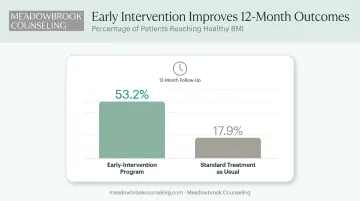
Early intervention changes outcomes. One study of young adults with anorexia found that 53.2% of patients in an early-intervention program reached a healthy BMI within 12 months, compared to just 17.9% of those receiving standard treatment as usual, according to research published in PMC.
Don't wait for things to get worse before looping in a medical provider, dietitian, and mental health counselor. Meadowbrook Counseling's therapists work alongside your medical team to address the emotional patterns driving disordered eating.
Finding the Right Treatment Team for Lasting Recovery
Recovery isn't built on isolated appointments. It relies on a coordinated team: a dietitian managing nutrition, a physician monitoring medical stability, and a mental health therapist addressing the psychological drivers underneath it all.
Meadowbrook Counseling serves as a resource for that therapy component. With offices across Utah, Washington, Arizona, Wisconsin, Massachusetts, Texas, Idaho, Florida, and Colorado, plus telehealth options, the practice offers:
- Personalized, evidence-based counseling matched to individual needs
- Insurance verification support before your first session
- Convenient locations and flexible scheduling across multiple states
If you're building a recovery team and need the counseling piece, reach out to Meadowbrook Counseling at 801-655-5450 or through their contact page. Their intake team will match you with a therapist experienced in eating disorder treatment and trauma-informed care.
Frequently Asked Questions
What is the first goal of nutrition therapy for patients with anorexia nervosa?
Medical stabilization comes first, correcting electrolyte imbalances and malnutrition-related risks before full weight restoration begins. This protects against refeeding syndrome during the highest-risk early period.
What are the nutritional treatments for anorexia?
Treatment typically includes individualized meal plans, gradual caloric increases, supplementation for identified deficiencies, and structured refeeding protocols under medical supervision. The approach shifts as the patient stabilizes.
Can a nutritionist help with anorexia?
Yes, particularly registered dietitians with eating disorder specialization. They work alongside licensed therapists and physicians as part of a coordinated treatment team, addressing the medical and nutritional side while therapy addresses the psychological one.
What's the difference between a nutritionist and a dietitian for eating disorder treatment?
Registered dietitians (RDN/RD) complete accredited education, supervised training, and a certification exam. Eating disorder-specialized RDNs may also hold the CEDS credential, showing additional targeted experience.
How long does nutrition therapy for anorexia recovery typically take?
Timelines vary widely by severity and level of care. Recovery often spans months to years, with treatment intensity decreasing gradually as medical and psychological stability improve.
Does insurance cover nutrition therapy and counseling for eating disorders?
Many insurance plans cover eating disorder treatment, including nutrition therapy and counseling, thanks to mental health parity laws. Coverage details vary by plan, so verifying your specific benefits before starting care is essential.