GAD is one of the most frequently diagnosed anxiety conditions in the United States. The good news: it's highly treatable. The tricky part is that treatment isn't one-size-fits-all. What works for a coworker or a family member might not work for you.
This article breaks down the main types of GAD treatment, how they differ, and how to figure out which path fits your life, with guidance from a licensed professional.
Key Takeaways
- GAD responds well to psychotherapy, medication, lifestyle strategies, or a combination of these approaches
- Cognitive behavioral therapy (CBT) is the most researched and effective psychotherapy for GAD
- Moderate to severe symptoms often respond best to combined treatment approaches
- The right approach depends on severity, personal preference, and access to care
Understanding GAD and Why Treatment Matters
GAD involves excessive, hard-to-control worry about everyday situations, lasting six months or more. It usually comes with physical symptoms:
- Persistent fatigue
- Muscle tension
- Restlessness or feeling on edge
- Trouble falling or staying asleep
- Difficulty concentrating
This isn't just "being a worrier." GAD is a diagnosable medical condition, and clinicians confirm it through structured tools rather than guesswork. The GAD-7, a seven-item screening questionnaire, is typically used alongside a full clinical evaluation. A score of 10 or higher on the GAD-7 has been shown to detect GAD with 89% sensitivity and 82% specificity in primary care settings, according to research published in JAMA Internal Medicine.
The Cost of Waiting
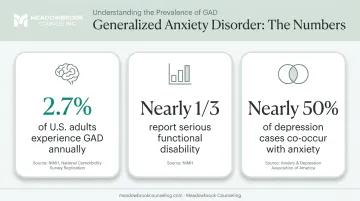
Roughly 2.7% of U.S. adults experience GAD in a given year, according to NIMH statistics. Nearly a third report serious functional disability, and left untreated, symptoms tend to compound rather than fade on their own.
Nearly half of people diagnosed with depression also have an anxiety disorder, per the Anxiety & Depression Association of America. Untreated GAD can strain relationships, disrupt work performance, and open the door to co-occurring depression, which is why matching the right treatment approach to your symptoms early makes such a difference. The sections below break down the options available, from talk therapy to medication and self-directed strategies.
Types of Treatment for Generalized Anxiety Disorder
GAD treatment generally falls into three categories: psychotherapy, medication, and complementary/lifestyle approaches. These can stand alone or work together, depending on your symptoms.
Most clinical guidelines, including those from the American Psychiatric Association and the UK's NICE, recommend starting with the least intensive effective option and adjusting from there based on how symptoms respond.
Psychotherapy (Talk Therapy)
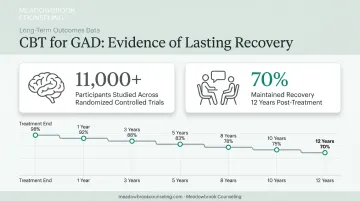
Psychotherapy means working with a licensed therapist to identify and reshape the thought and behavior patterns fueling your anxiety. Cognitive behavioral therapy (CBT) is the most studied and effective form for GAD. A meta-analysis covering over 11,000 participants confirmed its effectiveness across randomized controlled trials, according to research published on PMC.
That durability shows up long after treatment ends, since CBT targets root thought patterns rather than brain chemistry directly. One long-term study found that 70% of people who received CBT maintained their recovery 12 years later.
Best suited for:
- People who prefer non-medication approaches
- Those wanting durable, long-term coping skills
- Mild-to-moderate symptom presentations
- Anyone whose anxiety is tangled up with past trauma (where EMDR may help)
At Meadowbrook Counseling, therapists use evidence-based modalities like CBT and EMDR, matched to each client's specific concerns. Some clients need structured thought-pattern work; others need trauma processing first. A therapist trained in both can adjust course as treatment unfolds.
Trade-offs to know:
- Usually requires 12-15 weekly sessions, sometimes more
- Demands active participation between sessions, not just showing up
- Can feel uncomfortable short-term as you face avoided fears
- Waitlists for specialized therapists can delay your start
Medication
Pharmacological treatment uses prescribed medication to regulate the brain chemistry linked to anxiety. The most common options are SSRIs and SNRIs, including escitalopram, venlafaxine, duloxetine, and paroxetine, all FDA-approved for GAD.
Medication works on a biological level and doesn't require the same active behavioral work therapy does, though it takes time to kick in.
Best suited for:
- Moderate-to-severe symptoms
- People needing faster relief while building other coping strategies
- Those unable to start or complete therapy right away
Effectiveness data worth knowing:
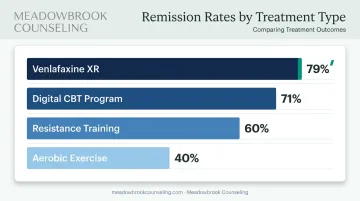
In one six-month open-label trial, patients treated with venlafaxine XR who completed the full course reached a 79% remission rate, according to research on remission in GAD. Medication also frequently helps co-occurring depression, which is common among people with GAD.
Trade-offs to know:
- Full effects typically take 2-6 weeks
- Common side effects: nausea, insomnia, fatigue, sexual side effects
- Benzodiazepines work fast but carry dependency risk, so they're generally reserved for short-term use only
Meadowbrook Counseling's therapists don't prescribe medication, but they can help clients understand when a conversation with a prescriber makes sense alongside therapy.
Complementary Approaches, Lifestyle Strategies, and Digital Tools
This category covers non-clinical supports: relaxation techniques, exercise, mindfulness practice, sleep and diet adjustments, and CBT-based apps. These tools are generally self-directed and low-cost, but they're not a substitute for evidence-based therapy or medication on their own.
What the research shows:
- A digital CBT program (DaylightRx) produced 71% remission versus 34.6% for a psychoeducation control group over 10 weeks, per a 2025 study in JAMA Network Open
- Resistance training achieved a 60% remission rate in one small trial of women with GAD, compared to 40% for aerobic exercise
- Mindfulness-based stress reduction significantly outperformed stress management education in reducing anxiety scores
Best suited for:
- People with mild symptoms
- Those on a waitlist for therapy
- Anyone using these as a supplement to ongoing treatment
Trade-offs to know:
- Long-term effectiveness data is limited when these are used alone
- App and supplement quality varies widely
- Not a substitute for professional care in moderate-to-severe cases
How to Choose the Right Type of Treatment
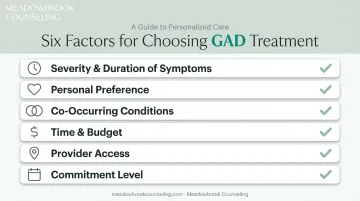
The best treatment path depends on your symptoms, preferences, and circumstances, not on what worked for your neighbor. Consider these factors:
- Severity and duration: Mild, occasional worry calls for a different approach than symptoms that disrupt work, sleep, or relationships
- Personal preference for talk therapy, medication, or both
- Co-occurring conditions can shift the right approach; depression, PTSD, and substance use often overlap with anxiety and change what treatment works best
- Time and budget, including how your insurance coverage applies
- Provider access: some areas have limited in-person options, making telehealth worth considering
- Commitment level — weekly sessions and daily medication both require consistency
These factors work together, not in isolation, so it helps to talk through them with a provider before committing to a plan. Meadowbrook Counseling verifies insurance benefits before your first session, so cost surprises don't derail your treatment decision.
What to Check Before Finalizing a Treatment Plan
Once you've reviewed the treatment options, use this checklist to pressure-test your decision before committing:
- Start conservative. Don't jump to medication or intensive treatment when therapy alone might work for milder symptoms.
- Know the limitations. Benzodiazepine dependency risk and CBT's time commitment are real trade-offs, not footnotes.
- Think sustainability. A treatment you'll actually stick with beats a "perfect" one you'll abandon after three weeks.
- Confirm the evidence base. Make sure your provider uses proven approaches matched to your needs, whether that's trauma history or co-occurring depression.
A therapist who takes time to understand your specific history, rather than applying a one-size-fits-all protocol, makes this last step far easier to verify.
Final Thoughts
GAD is common, and it's treatable. Psychotherapy, medication, and complementary strategies each play a distinct role, and none of them is inherently "better" in isolation. For many people with moderate to severe symptoms, combining approaches under professional guidance produces the strongest results.
Finding that professional guidance starts with reaching out to a licensed therapist who can build a treatment plan around you, not a generic template. Meadowbrook Counseling's clinicians verify your insurance benefits and match you with a therapist suited to your needs, so you know exactly where to start.
Frequently Asked Questions
What is the most effective therapy for generalized anxiety disorder?
Cognitive behavioral therapy (CBT) is the most researched and widely recommended psychotherapy for GAD. For moderate-to-severe cases, combining CBT with medication often produces the best results.
What is a generalized anxiety disorder experience like?
It involves persistent, hard-to-control worry about everyday things, paired with physical symptoms like fatigue, muscle tension, and trouble sleeping. Symptoms typically occur most days for six months or more.
Does GAD ever fully go away?
For some people, GAD is a long-term condition. Many others achieve significant symptom relief and long stretches of remission with consistent treatment, especially therapy.
Can GAD be treated without medication?
Yes. Psychotherapy, particularly CBT, combined with lifestyle strategies can effectively manage mild-to-moderate GAD without medication. Moderate-to-severe cases often benefit more from combined treatment.
How long does it take for GAD treatment to work?
Medication typically takes 2-6 weeks to show effects. Therapy improvements build more gradually, often over several weeks to months of consistent sessions.
What happens if generalized anxiety disorder is left untreated?
Untreated GAD often worsens over time and contributes to co-occurring depression. It can also interfere significantly with work performance, relationships, and physical health.