
More than 6 in 10 U.S. adults are at least somewhat worried about global warming, according to Yale's Fall 2025 Climate Change in the American Mind survey, with 29% reporting they're "very worried." That worry has a name: climate anxiety.
This guide breaks down what climate anxiety actually is, whether it counts as a mental health condition, and how to find a therapist near you who takes it seriously instead of brushing it off.
Key Takeaways
- 64% of U.S. adults report at least some worry about global warming, making climate anxiety a widely shared experience
- Climate anxiety isn't a diagnosable disorder, but it can still disrupt sleep, work, and relationships
- Over 45% of young people (16-25) globally say climate feelings negatively affect their daily functioning
- Climate-aware therapists validate your concerns first, then help build practical coping skills
- Meadowbrook Counseling matches you with a therapist and verifies insurance before your first session, in-person or via telehealth
What Is Climate Anxiety, and Is It a Mental Illness?
Climate anxiety, also called eco-anxiety, is defined by the American Psychological Association and ecoAmerica as "a chronic fear of environmental doom." It's the persistent worry that builds as you watch climate disasters unfold, wonder about the future, or grieve ecological loss.
Here's the direct answer to a question a lot of people quietly ask themselves: no, climate anxiety is not a diagnosable mental illness. A peer-reviewed scoping review confirms it isn't listed in the DSM-5. The APA is explicit about this too — it's "normal for people to be worried," and clinicians are cautioned against treating a rational response to a real threat as a disorder.
Common Symptoms to Recognize
According to Wake Forest University counseling department chair Nathaniel Ivers, climate anxiety can show up as:
- Restlessness and fatigue
- Irritability and emotional dysregulation
- Insomnia or oversleeping
- Difficulty concentrating
- Racing heart and physical tension
- Persistent feelings of impending doom
The Rational-but-Debilitating Paradox
Here's the tricky part. Your anxiety can be a completely reasonable response to a genuine threat and still need professional support if it's wrecking your sleep or pulling you away from relationships. Validity and impairment aren't mutually exclusive — and therapists trained in anxiety treatment, including those on Meadowbrook Counseling's team, work specifically with this overlap rather than dismissing the fear as irrational.
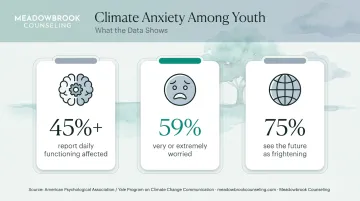
This burden falls disproportionately on young people. A landmark Lancet Planetary Health study surveyed 10,000 people ages 16-25 across ten countries, including the U.S., and found that more than 45% said climate-related feelings negatively affected their daily life and functioning.
Some groups feel this more acutely than others:
- Children, teens, and young adults
- Parents worried about their kids' future
- People living in disaster-prone regions
- Anyone with a pre-existing anxiety disorder or trauma history
Is There Therapy for Climate Change Anxiety?
Yes. It's often called climate-aware therapy or ecotherapy, and it's built specifically around the reality that this fear stems from an actual, documented threat rather than a distorted thought pattern.
A climate-aware therapist is described in professional literature as someone who recognizes climate change as "both a global threat to all life on Earth and a deeply personal threat to the mental and physical well-being" of individuals and communities.
Why Generic Anxiety Treatment Can Fall Short
Traditional CBT often works by challenging "irrational" thoughts. But climate fears aren't irrational — they're grounded in real, observable risk. That's why many climate-aware therapists lead with validation before disputation. The goal isn't to talk you out of caring. It's to help you carry that concern without it consuming you.
That said, CBT isn't off the table. Some early clinical research points to tailored, therapist-supported internet CBT reducing climate-related distress in adults, with moderate-to-large effects on depression and stress. The key word is tailored: it addresses overwhelm and unhelpful thought spirals without dismissing the underlying concern as unfounded.
Evidence-Based Approaches Therapists Use
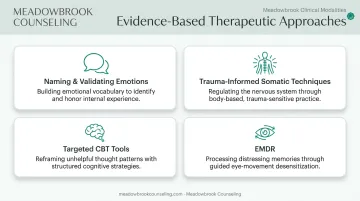
- Naming and validating emotions rather than minimizing them
- Trauma-informed, somatic techniques to calm an activated nervous system
- Targeted CBT tools that reframe catastrophizing without denying real risk
- EMDR (Eye Movement Desensitization and Reprocessing) for processing disaster-related trauma and intrusive fear
EMDR is worth a closer look here. Research supports its effectiveness for people who've lived through natural disasters, helping them process trauma tied to specific events rather than ongoing anticipatory worry. At Meadowbrook Counseling, therapist Rosario Toral (ACMHC, EMDR) brings this trauma-focused approach to clients working through grief, loss, and overwhelming experiences. It's the same skill set that helps when climate distress becomes tangled up with disaster trauma or acute grief.
She's not the only one on Meadowbrook's team with this kind of training. Therapists like Jonathan Nash and Jonathan Neves, both EMDR-trained CMHCs, work extensively with anxiety and trauma using EMDR alongside CBT and ACT.
Building Resilience, Not Eliminating Anxiety
The goal isn't to make the anxiety disappear — it's to help you function well despite it. That means:
- Fostering community connection
- Supporting meaningful action (without burnout)
- Treating co-occurring conditions like depression or generalized anxiety that often ride alongside climate distress
One U.S. study of 284 college students found that collective action, but not individual action, weakened the link between climate-anxiety impairment and depressive symptoms. Doing something with others may matter more than doing something alone.
How Do You Calm Down Climate Anxiety?
There's no single fix, but a few strategies show up consistently in both clinical guidance and research.
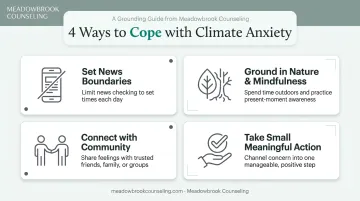
- Set boundaries around climate news. Constant exposure to disaster coverage has been shown to spike acute anxiety. You don't need to disengage entirely — just stop the endless scroll.
- Ground yourself in nature and mindfulness. These practices can support overall regulation. Research on their direct effect on climate anxiety is mixed, so treat them as one tool among several, not a cure.
- Connect with others who share your concerns. Isolation makes climate dread heavier. Community, even informal, tends to lighten the load.
- Take small, meaningful action. Advocacy, sustainable choices, volunteering — anything that shifts you from helplessness toward agency.
One study found that a nature-based program actually increased eco-anxiety scores in teen participants, even while boosting their sense of capability. Coping strategies aren't universal. What steadies one person might stir up more feeling in another, which is why a therapist who tailors treatment to you matters. At Meadowbrook Counseling, therapists build personalized plans around what actually works for each client, rather than applying a one-size-fits-all coping list.
What to Look for in a Climate Anxiety Therapist Near You
Not every therapist has been trained to recognize climate distress as legitimate. Some may unintentionally label it catastrophizing or irrational thinking — which can leave you feeling more dismissed than helped.
Qualities Worth Prioritizing
- Basic climate literacy — they understand the science, not just the psychology
- Comfort discussing environmental topics without minimizing or over-alarming
- Personal awareness of their own climate emotions, so they're not projecting denial or despair onto you
- A focus on empowerment, not just symptom management
- Trauma, grief, or anxiety specialization relevant to your specific experience
Climate-related concerns are becoming common in therapy sessions, yet formal training on the topic still lags behind demand among mental health providers. Even well-meaning therapists may not have specialized in this yet, so ask directly about their comfort level with the topic before committing.
Practical Logistics That Matter
Beyond fit, the search for "a climate anxiety therapist near me" comes down to real-world logistics:
| Consideration | Why it matters |
|---|---|
| In-person vs. telehealth | Determines flexibility and access, especially in rural areas |
| Insurance coverage | Avoids surprise costs and coverage gaps |
| Specialty match | Trauma, grief, and anxiety training all apply differently |
This is where Meadowbrook Counseling simplifies things. Their intake process matches you with a therapist suited to your specific concerns, and they verify your insurance benefits before your first session — no guessing whether a provider takes your plan.
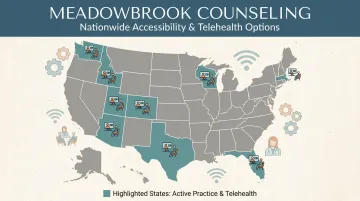
Meadowbrook operates offices across Utah, Washington, Arizona, Wisconsin, Massachusetts, Texas, Idaho, Florida, and Colorado, plus telehealth options depending on your state and therapist availability. Whether you're in Salt Lake City or Plymouth, that reach makes it easier to find a therapist who understands what you're carrying.
Supporting Kids and Loved Ones Through Climate Anxiety
Children and teens often feel this more intensely than adults. In a global survey of youth published in The Lancet Planetary Health, 59% of respondents ages 16-25 said they were very or extremely worried, and 75% described the future as frightening.
How to Support a Worried Child or Teen
- Ask what they think and feel, then actually listen before responding
- Avoid toxic positivity — saying "everything will be fine" can feel dismissive, not comforting
- Give honest, age-appropriate information rather than avoiding the topic
- Let them see you manage worry without pretending it doesn't exist; modeling healthy coping matters more than having perfect answers
- Limit overwhelming media exposure, especially graphic disaster coverage
These strategies help, but they have limits. If your child's worry is disrupting sleep, tanking school performance, or causing withdrawal from friends and activities, that's the signal to bring in professional support. Meadowbrook's therapists work with children, teens, and families using approaches like CBT and trauma-focused techniques — skills that apply directly to climate-related distress, even without a climate-specific label.
Finding Support with Meadowbrook Counseling
Climate distress deserves the same compassionate, evidence-based care as any other source of anxiety, grief, or trauma. That's the standard Meadowbrook Counseling holds across every location, whether you're dealing with disaster-related trauma, generalized worry about the future, or grief tied to environmental loss.
Ready to talk to someone? Getting started is straightforward:
- Call 801-655-5450 or reach out through the contact page
- Get matched with a therapist experienced in anxiety, trauma, or grief
- Have your insurance benefits verified before your first appointment — no surprises, no guesswork
You don't have to sort out whether your climate worry "counts" enough to deserve help. If it's weighing on you, that's reason enough to talk to someone.
Frequently Asked Questions
Is there a therapy for climate change anxiety?
Yes. Climate-aware therapy and ecotherapy blend validation, trauma-informed techniques like EMDR, and targeted coping strategies. The approach treats your concern as valid rather than something to be argued away.
How do you calm down climate anxiety?
Limit doom-scrolling, spend time grounding yourself in nature, connect with supportive communities, and take small, meaningful action. These won't eliminate the worry, but they can make it more manageable.
Is climate anxiety a mental illness?
No, it's not a diagnosable disorder listed in the DSM-5. It's considered a rational response to a real threat, though professional support is worth exploring if it starts disrupting your sleep, work, or relationships.
What are the warning signs that climate anxiety needs professional support?
Watch for persistent hopelessness, disrupted sleep, social withdrawal, or difficulty concentrating at work or school. If these symptoms stick around and interfere with daily functioning, it's time to talk to a therapist.
Can children experience climate anxiety?
Yes, and often more intensely than adults. A global youth survey published in The Lancet Planetary Health found that 59% of respondents ages 16-25 felt very or extremely worried about climate change. Seek professional support if it affects your child's sleep, schoolwork, or mood.
How do I find the right climate-aware therapist near me?
Look for someone with climate literacy, trauma-informed skills, and a validating rather than dismissive approach. Meadowbrook Counseling's therapist matching process, combined with insurance verification before your first session, makes that search considerably easier.