

This isn't a communication failure. It's often something else: unprocessed trauma living in the nervous system, not the vocabulary.
Traditional couples therapy is excellent at improving how partners talk to each other. But when a reaction is rooted in trauma, logic alone rarely reaches it. That's where EMDR (Eye Movement Desensitization and Reprocessing) enters the conversation. This guide covers what EMDR actually is, how it fits alongside couples therapy, who tends to benefit, and what the process looks like—so you and your partner can decide whether it's worth exploring with a qualified therapist.
Key Takeaways
- EMDR helps the brain reprocess "stuck" traumatic memories so they stop hijacking present-day reactions
- Both partners rarely reprocess trauma simultaneously—EMDR usually runs alongside couples therapy instead
- Infidelity, grief, attachment wounds, and childhood trauma are common reasons couples explore EMDR
- Active affairs, secrets, or unmanaged addiction typically need attention before EMDR can begin
- A therapist trained in both EMDR and couples dynamics offers the most integrated path forward
What Is EMDR Therapy?
EMDR is a structured therapy that uses bilateral stimulation — guided eye movements, tapping, or alternating tones — to help the brain finish processing a memory it got stuck on. The American Psychological Association describes it as a treatment where clients briefly focus on a traumatic memory while receiving this stimulation, which appears to help the brain integrate the experience rather than keep replaying it.
The APA's 2017 clinical guideline conditionally recommends EMDR for adults with PTSD. But the memories that get "stuck" this way aren't always dramatic events — trauma in this context also includes:
- Emotionally unmet childhood needs
- Unpredictable or inconsistent love from a caregiver
- Repeated rejection or betrayal
- Anything that shaped how safe connection feels to you
Trauma tends to live in the nervous system, not just in memory. That's a key reason why calm, logical conversation during couples therapy sometimes can't "talk someone down" from a triggered state. The body reacts before the thinking brain catches up.
The Eight-Phase Framework
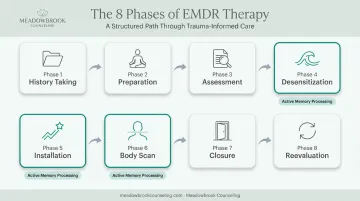
EMDR isn't just eye movements. The EMDR International Association outlines eight distinct phases, starting with history-taking and preparation, moving through memory processing, and ending with reevaluation. Phases 4 through 6 are where the direct memory work happens; everything before that builds the foundation.
The goal is a specific shift: memories that once felt vivid, present-tense, and physically charged start to feel like they belong to the past. The emotional intensity fades, even though the facts of what happened don't change.
How EMDR Is Used in Couples Therapy
Yes, EMDR is used in couples therapy. But it's rarely both partners reprocessing trauma simultaneously in the same session. More often, it's woven thoughtfully into the broader relational work.
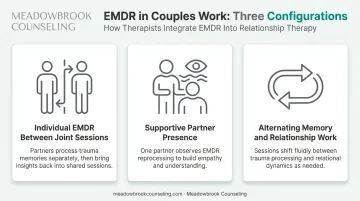
A 2022 qualitative study of 13 licensed therapists who integrate EMDR with couples models found a few common configurations: individual EMDR sessions between conjoint meetings, one partner processing while the other observes supportively, or therapists moving back and forth between memory work and relationship work depending on what the couple needs that week.
Individual EMDR Within a Couples Framework
The most common model looks like this: one partner does individual EMDR sessions, sometimes in a condensed, intensive format, to process personal trauma. Couples sessions continue separately with a neutral focus on the relationship.
Many therapists prefer structuring the individual work as time-limited rather than open-ended talk therapy. There's a practical reason:
- It preserves the couples therapist's neutrality
- It prevents the non-processing partner from feeling shut out of unknown conversations
- It keeps the focus on a specific memory or theme, not an open-ended individual therapy track
Conjoint and Supportive Processing
In the "supportive partner" model, one partner reprocesses a memory while the other partner is present in the room. This can build real empathy. Watching your partner work through a painful memory often shifts how you understand their triggers going forward.
Beyond witnessing the session itself, therapists frequently teach both partners shared resourcing tools, such as a calm/safe place visualization or grounding techniques. This gives couples a common language to use when triggers show up at home, not just in session.
After individual processing, couples typically return to joint sessions to integrate what shifted. This step folds new understanding back into daily connection instead of leaving it in the therapy room.
Signs Your Relationship Could Benefit From EMDR
Not every rough patch calls for trauma-focused work. But certain patterns suggest something deeper than a communication issue is at play.
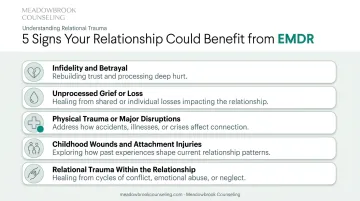
Infidelity and betrayal. Intrusive images, hypervigilance, and emotional flooding after an affair can trap couples in a loop that talk therapy alone struggles to break. The betrayed partner may find themselves reliving the discovery moment over and over, long after they've discussed every detail.
Unprocessed grief or loss. When one or both partners haven't fully grieved—a parent, a pregnancy, a former life—it can create quiet distance or misattunement that neither person can quite name. Peer-reviewed research on EMDR and grief describes its use in prolonged grief, though findings don't directly measure couple satisfaction.
Physical trauma or major disruptions. Accidents, serious illness, or a traumatic birth can shift someone's baseline sense of safety, often showing up later as anxiety, withdrawal, or changes in physical intimacy.
Childhood wounds and attachment injuries. Shutting down during conflict, needing constant reassurance, or fearing closeness often traces back to early relationships—not the current partner. These patterns tend to repeat until the original wound gets addressed directly.
Relational trauma from within the relationship itself. Periods of severe conflict or repeated unrepaired ruptures require careful assessment before introducing EMDR, since the relationship itself may need stabilizing first.
What to Expect: The EMDR Process for Couples
Meaningful trauma work doesn't start with diving into the hardest memory. It starts with preparation.
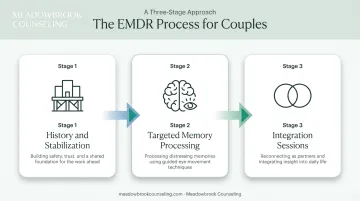
- History and stabilization – The therapist takes a history, explains the process, and helps you build grounding and coping skills before touching anything distressing
- Targeted memory processing – Using bilateral stimulation, you focus on a specific memory; this phase is often the most emotionally intense
- Integration sessions – Insights and shifts get brought back into the relationship, often in joint sessions with your partner
Once processing begins, many couples wonder what the aftermath feels like.
Does EMDR Make You Tired?
Yes, often. Feeling mentally foggy, physically drained, or emotionally raw after a session is common. Your brain has done real processing work.
EMDRIA's client guidance recommends avoiding demanding activities right afterward. This usually eases within a day, with rest.
Is EMDR Right for Every Couple? Important Considerations
EMDR isn't a fit for every couple, or every moment in a couple's therapy journey. Timing matters as much as the modality itself.
Generally not recommended yet when there's:
- An active, ongoing affair
- Kept secrets that haven't been disclosed
- Unmanaged addiction
- A dissociative disorder that hasn't been assessed or stabilized
Relational and personal stability typically need to come first. That said, these aren't automatic, permanent bans—a trained clinician assesses case by case rather than applying a blanket rule.
Readiness also depends on something clinicians call the window of tolerance: your capacity to stay present with difficult material without becoming overwhelmed or shutting down entirely. A therapist evaluates this before starting memory work, for both partners.
The partner not doing the EMDR work themselves is still part of the process. Patience and openness matter while your partner works through difficult material—even when you're not the one in the "hot seat."
Choosing a therapist who understands both trauma processing and relationship dynamics makes a real difference here. At Meadowbrook Counseling, EMDR-certified clinicians combine trauma processing with couples-focused approaches like Emotionally Focused Therapy, addressing both individual trauma and how it shows up between partners. Once you've found the right fit, Meadowbrook also helps verify insurance benefits before your first session, so getting started doesn't add another barrier to an already difficult decision.
Frequently Asked Questions
Is EMDR used in couples therapy?
Yes. It's commonly integrated into couples therapy, though it's typically applied to one partner individually within the couples context, or through supportive and conjoint formats, rather than both partners reprocessing trauma at the same time.
Does EMDR make you tired?
Yes, this is common. Mental fogginess, fatigue, or emotional drain after a session reflects real processing work happening in the brain, and it usually eases within a day.
When is EMDR not recommended?
EMDR is generally paused when there's an active affair, undisclosed secrets, untreated addiction, or an unmanaged dissociative disorder. Stability typically needs to come first, based on a therapist's individual assessment.
Can both partners do EMDR together in the same session?
Reprocessing is usually done individually, though the other partner may be present in a supportive role. Joint sessions are more commonly used to integrate progress, not for simultaneous trauma processing.
How many EMDR sessions do couples typically need?
This varies widely based on history and goals. It can range from several weekly sessions to a condensed, multi-hour intensive format, depending on what a therapist recommends after assessment.
Is EMDR therapy covered by insurance?
Many insurance plans cover EMDR when it's provided by a licensed therapist, though coverage details vary by plan, and Meadowbrook Counseling verifies your specific benefits before your first session.