

PTSD isn't about being unable to "move on." It involves genuine neurological changes — altered fear circuitry, disrupted memory encoding, a nervous system stuck in threat mode — that don't resolve through willpower alone. According to the VA's National Center for PTSD, approximately 13 million U.S. adults had PTSD in 2020, with about 5% of adults affected in any given year.
The good news: targeted, structured treatment works. Cognitive Behavioral Therapy (CBT) is a first-line treatment recommended by the American Psychological Association (APA) for PTSD, backed by decades of clinical research across diverse trauma populations. This guide covers how CBT works, the specific techniques involved, what treatment actually feels like, and how to get started.
Key Takeaways
- CBT is an APA-recommended, first-line treatment that targets the thoughts, feelings, and behaviors sustaining PTSD
- Core techniques include cognitive restructuring, trauma-focused exposure, and relaxation/grounding skills
- Treatment typically runs 12–16 sessions, though CPT and Prolonged Exposure have distinct session benchmarks
- CBT and EMDR show comparable outcomes in research; the best fit depends on individual needs and therapist expertise
- Starting treatment means finding a licensed, trauma-focused CBT therapist with insurance verification support available
Understanding PTSD and Why It Needs Specialized Treatment
What PTSD Actually Is
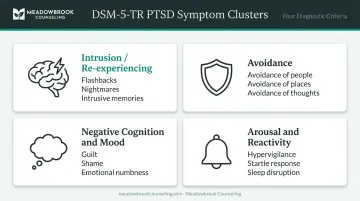
PTSD can develop after exposure to a traumatic event — combat, assault, accidents, natural disasters, childhood abuse, or witnessing violence. The DSM-5-TR organizes PTSD into four symptom clusters:
- Intrusion/re-experiencing — flashbacks, nightmares, intrusive memories
- Avoidance — steering clear of people, places, thoughts, or feelings tied to the trauma
- Negative alterations in cognition and mood — persistent guilt, shame, distorted self-blame, emotional numbness
- Alterations in arousal and reactivity — hypervigilance, exaggerated startle response, sleep disruption, irritability
For a PTSD diagnosis, symptoms must persist for more than one month and cause clinically significant distress or functional impairment. This threshold matters — not everyone who experiences trauma will develop PTSD, and short-lived post-trauma symptoms are not the same condition.
Why PTSD Doesn't Just Resolve
Traumatic memories are encoded differently than ordinary ones. Rather than settling into memory as a past event, traumatic memories stay activated — easily triggered by sensory cues, fragmented rather than coherent. The brain's threat-detection system stays activated even when no real danger exists.
Avoidance makes this worse. Every time someone avoids a trauma reminder, they get short-term relief — which reinforces avoidance as a coping strategy. The brain never learns that the reminder is no longer dangerous. Over time, the avoidance expands, the fear associations deepen, and the PTSD entrenches itself.
Breaking this cycle requires structured treatment — something that directly targets both the avoidance patterns and the underlying fear responses keeping PTSD in place.
How CBT Works for PTSD: The Core Mechanisms
CBT is built on a straightforward idea: thoughts, feelings, and behaviors influence each other. Shift one, and the others tend to follow. For PTSD, this matters because the condition keeps all three locked in a self-reinforcing cycle — distorted thinking fuels avoidance, avoidance prevents emotional processing, and unprocessed fear keeps symptoms alive.
Emotional Processing Theory
Emotional Processing Theory (Rauch & Foa, 2006) explains why avoidance keeps PTSD locked in place. After trauma, fear becomes associated with objectively safe reminders — a specific smell, a type of person, a news segment. The brain tags these as dangerous because they were present during the traumatic event.
CBT addresses this by guiding clients to engage with trauma-related memories and cues in a controlled, structured context. This engagement supplies corrective information the brain has been denied: that the reminder itself is not the threat, and that distress, while uncomfortable, is tolerable and temporary. Over time, the fear association updates.
Social Cognitive Theory
Social Cognitive Theory (Benight & Bandura, 2004) highlights a different mechanism: trauma often shatters core beliefs. Survivors may conclude that they are to blame, that the world is entirely dangerous, or that they are incapable of coping. CPT calls these "stuck points" — distorted conclusions about safety, trust, or self-worth that form in the aftermath of trauma and resist updating on their own.
CBT helps clients identify where trauma has warped these beliefs and build a more accurate picture of themselves and the world, restoring a sense of agency rather than helplessness.
What This Looks Like in Practice
Common cognitive distortions in PTSD include:
- Overgeneralizing danger ("Nowhere is safe")
- Self-blame ("If I hadn't been there, it wouldn't have happened")
- Emotional reasoning ("I feel terrified, so there must be real danger")
- Catastrophizing future threats based on past trauma
CBT trains clients to recognize these patterns and examine them with curiosity rather than avoidance. The goal isn't to dismiss real danger — it's to separate actual threat from trauma-distorted perception. Therapists use tools like thought records, Socratic questioning, and structured worksheets to make that distinction concrete and repeatable. With practice, clients develop the ability to challenge distorted thinking on their own, which is what makes the gains from CBT durable.
Evidence-Based CBT Techniques Used for PTSD
CBT for PTSD rests on three pillars: cognitive restructuring, trauma-focused exposure, and psychoeducation with stress management. Therapists combine and sequence these based on each client's symptom profile and readiness for treatment.
Cognitive Restructuring
Cognitive restructuring targets the stuck points and automatic negative thoughts maintaining PTSD. The process involves:
- Identifying automatic thoughts — noticing what the mind says immediately following a trigger or trauma reminder
- Evaluating the thought — examining evidence for and against it, considering alternative interpretations
- Replacing distorted beliefs — developing more balanced, accurate thinking patterns
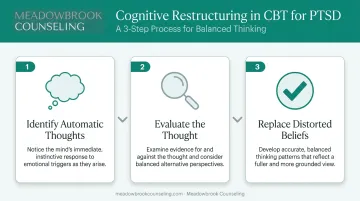
The goal is accuracy, not optimism. A client who believes "I should have fought back" can examine what they actually knew in the moment, what was physiologically possible under threat, and what a compassionate observer would say — gradually shifting from harsh self-judgment to a more realistic account.
Trauma-Focused Exposure
Exposure work directly targets avoidance. Rather than waiting for avoidance to naturally decrease (it won't), therapists guide clients through planned, graduated contact with trauma-related memories and external reminders.
This is always collaborative — clients move at a pace they can tolerate, retain control throughout, and work with a therapist who monitors their distress and guides them through. The goal isn't to relive trauma; it's to demonstrate that engaging with the memory does not cause the danger the brain predicts. Each successful exposure weakens the fear association.
Psychoeducation and Stress Management
Psychoeducation is underestimated. Many clients arrive carrying significant shame — believing their symptoms mean they are broken or weak. Understanding why PTSD symptoms occur (the brain's normal response to abnormal events) reduces shame and increases willingness to engage with treatment.
Stress management skills taught alongside CBT include:
- Diaphragmatic breathing — activates the parasympathetic nervous system, directly countering hyperarousal
- Grounding exercises — sensory techniques that interrupt dissociation or flashbacks
- Progressive muscle relaxation — reduces physiological tension between sessions
These skills matter particularly during exposure work, when clients need the ability to manage distress on their own. Two structured protocols build directly on these foundations — and both carry the strongest available clinical endorsement.
Specific CBT Protocols for PTSD
Two structured protocols built on CBT foundations are both designated as Strong For recommendations in the 2025 APA Clinical Practice Guideline:
| Protocol | Primary Focus | Typical Length |
|---|---|---|
| Cognitive Processing Therapy (CPT) | Identifying and revising trauma-related "stuck points" | ~12 sessions |
| Prolonged Exposure (PE) | Planned, repeated approach to trauma memories and avoided situations | 8–15 weekly, 90-minute sessions |
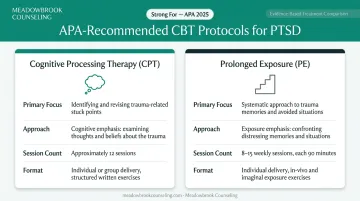
CPT emphasizes the cognitive work — what trauma made you believe about yourself and the world. PE emphasizes systematic exposure — building tolerance for trauma-related distress by engaging with it rather than fleeing. Both require active participation, homework, and tolerance for uncomfortable emotional material.
What to Expect During CBT Treatment for PTSD
The Treatment Arc
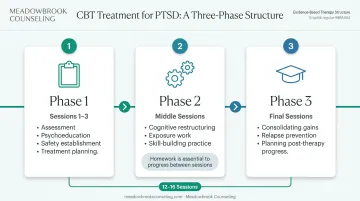
CBT for PTSD follows a recognizable structure across most protocols:
- Sessions 1–3: Assessment, psychoeducation, establishing safety, treatment planning
- Middle sessions: Introducing and practicing core techniques — cognitive restructuring, exposure work, skill-building
- Final sessions: Consolidating gains, relapse prevention, planning for continued progress after therapy ends
Most adults complete treatment over 12–16 sessions, though CPT's benchmark is approximately 12 and PE ranges from 8–15. Duration varies based on symptom severity, comorbid conditions, and engagement with between-session practice.
The Role of Homework
CBT doesn't end when the session does. Between-session assignments — thought journals, cognitive worksheets, graduated exposure tasks — are core to the treatment, not optional extras. Research shows that homework completion in PE predicts larger symptom improvement and roughly twice the odds of remission. Consistent practice between sessions directly shapes outcomes.
Temporary Worsening Is Possible
Engaging with avoided trauma material is uncomfortable. Some clients feel temporarily worse before they feel better , and that's worth naming honestly rather than glossing over. Research indicates that temporary symptom exacerbation occurs in a minority of CPT participants and does not predict worse final outcomes or higher non-completion rates. It's a monitored possibility, not a guaranteed stage.
The structure and safety the therapist provides matters here. You won't be pushed into material faster than you can handle.
When Treatment Doesn't Fully Work
Even with strong evidence behind these approaches, not everyone responds fully. A 2024 meta-analysis estimated overall psychotherapy nonresponse at approximately 39% across PTSD treatments, with estimates of 47% for CPT and 40% for PE under certain definitions.
Non-response doesn't mean the process is over; it means the treatment plan needs adjustment. Several factors can complicate outcomes:
- Comorbid depression or anxiety
- Substance use history
- Complex or repeated trauma
- Inconsistent session attendance or dropout
Alternative approaches, combined treatments, or different protocols may be indicated when initial treatment falls short.
CBT vs. Other PTSD Treatments: How They Compare
CBT vs. EMDR
Both CBT and EMDR hold first-line status as evidence-based PTSD treatments. Research shows comparable outcomes overall, though a 2018 meta-analysis of 11 randomized trials found a small advantage for EMDR on post-traumatic symptoms (SMD -0.43).
The techniques differ in meaningful ways. CBT centers on explicit cognitive restructuring and planned exposure. EMDR uses bilateral stimulation — typically eye movements — to process traumatic memories with less direct narrative engagement.
Neither approach is universally superior. The best fit depends on the client's preferences, trauma history, and therapist expertise. At Meadowbrook Counseling, therapists trained in both modalities — including Laura Krieger (LICSW, Bothell, WA) and Jonathan Nash (CMHC, Burley, ID) — can recommend the right fit or integrate both approaches within one treatment plan.
CBT vs. Medication
For clients weighing therapy against medication, current guidelines offer clear direction. The VA/DoD 2023 guideline recommends trauma-focused psychotherapy (CPT, PE, or EMDR) over pharmacologic interventions as primary PTSD treatment. The APA's 2025 guideline notes the direct evidence comparing SSRIs to psychological therapy remains insufficient to draw firm conclusions.
| Treatment Type | Role in PTSD Care |
|---|---|
| Trauma-focused therapy (CPT, PE, EMDR) | First-line recommendation per VA/DoD and APA guidelines |
| SSRIs / pharmacotherapy | Adjunctive support for severe symptoms or comorbid depression |
| Combined approach | Appropriate when symptoms are complex or therapy access is limited |
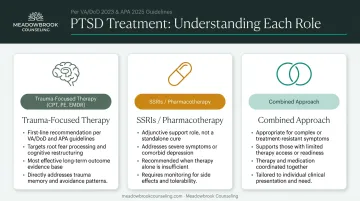
Medication can be a useful complement — particularly for severe symptoms or comorbid depression — but it is not the first-line choice when trauma-focused therapy is accessible.
How to Start CBT for PTSD
What to Look for in a Therapist
When selecting a therapist for PTSD, check for:
- Licensure as an LCSW, LMFT, LICSW, CMHC, or equivalent credential
- Specific training in CPT, PE, TF-CBT, or other trauma-focused protocols — not just general CBT
- Experience with your specific trauma type — combat trauma, childhood abuse, assault, and accident-related PTSD each call for different clinical familiarity
- A therapeutic alliance that feels genuine — you should feel safe and understood; studies show the therapeutic relationship accounts for a significant share of treatment outcomes
Preparing for the First Session
Many people delay starting therapy because they're uncertain what to expect. A few things help:
- Review your symptoms and their functional impact before the session — what's most disruptive day-to-day?
- Know that you set the pace; you won't be asked to recount every detail of your trauma immediately
- Come with questions: What protocol does the therapist use? What does homework look like? How will progress be tracked?
Getting Started with Meadowbrook Counseling
If you're ready to apply those questions to a real search, Meadowbrook Counseling offers therapists trained in trauma-focused CBT, TF-CBT, and EMDR across locations in Utah, Idaho, Massachusetts, Florida, Texas, Colorado, Wisconsin, Washington, and Arizona. Therapists like Jonathan Malley (LMFT) and Jonathan Nash (CMHC) both hold TF-CBT and EMDR training and work directly with PTSD clients.
The intake team helps match clients to the right therapist based on clinical need, location, and modality fit. Meadowbrook also offers comprehensive insurance verification before the first session — so insurance uncertainty doesn't delay your first appointment. Call (801) 655-5450 or visit meadowbrookcounseling.com/contact to begin.
Frequently Asked Questions
What is cognitive behavioral therapy (CBT) for PTSD?
CBT for PTSD is a structured, evidence-based talk therapy that targets the distorted thoughts, avoidance behaviors, and emotional responses sustaining PTSD symptoms. It is recommended by the APA as a first-line treatment and is typically delivered over 12–16 structured sessions.
Is CBT considered the gold-standard treatment for PTSD?
CBT-based protocols — specifically Cognitive Processing Therapy and Prolonged Exposure — receive a Strong For recommendation in the APA's 2025 Clinical Practice Guideline, based on decades of research across diverse trauma populations.
How is CBT used to manage stress and PTSD symptoms?
CBT equips clients with cognitive restructuring to challenge trauma-related thoughts, exposure techniques to reduce avoidance, and grounding/relaxation skills to manage day-to-day distress. Together, these tools reduce symptom intensity and restore day-to-day functioning.
Which is better for PTSD: CBT or EMDR?
Research shows both are effective with generally comparable outcomes. The best choice depends on individual preference, trauma history, and therapist expertise. Some clients benefit from a combined or sequenced approach using both modalities within a single treatment plan.
How many CBT sessions are needed to treat PTSD?
Most adults complete treatment over 12–16 sessions, though CPT's benchmark is approximately 12 sessions and PE ranges from 8–15. Symptom severity, comorbidities, and homework engagement all influence the actual number needed.
Can CBT for PTSD be done online or via telehealth?
Yes. Telehealth delivery of validated CBT protocols like CPT and PE has been shown effective in research, with randomized studies finding outcomes comparable to in-person care. The 2023 VA/DoD guideline supports secure video delivery — an option Meadowbrook Counseling provides across multiple states.