
If this sounds familiar, you're not broken, and neither is your relationship. The transition to parenthood is one of the most common relationship stressors couples face, and it's far more universal than most new parents realize. This article breaks down why relationships shift after a baby arrives, the specific struggles couples run into, and how couples counseling, including support available through Meadowbrook Counseling, can help you reconnect.
Key Takeaways
- Relationship strain after a baby is statistically normal, not a sign of failure
- Sleep loss and shifting roles are often the biggest culprits behind lost intimacy
- Couples counseling offers tools, structure, and a neutral space to reconnect
- Starting therapy early, even during pregnancy, can prevent bigger problems later
- Getting matched with the right therapist and confirming insurance coverage happens before your first session at Meadowbrook Counseling
Is It Normal for Couples to Struggle After Having a Baby?
Yes, and the research confirms it clearly.
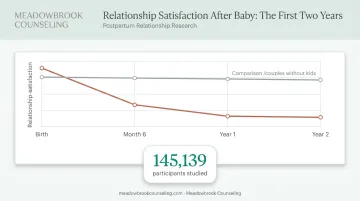
A 2022 meta-analysis pooling 145,139 participants across 106 samples found that both mothers and fathers experience a measurable decline in relationship satisfaction during the first year postpartum, with the decline continuing through the second year. Researchers tracking this transition to parenthood over time found the drop was noticeably steeper for new parents than for couples without kids.
This isn't a short-term dip, either. An earlier eight-year study following 218 couples found comparably sharp declines in satisfaction, with effects that lingered for years rather than fading after a few sleepless months.
Parenthood as "The Great Excavator"
Here's the reframe that helps most couples: a baby doesn't create brand-new problems. It excavates the ones that were already there.
- Communication issues that existed before pregnancy often intensify
- Unspoken assumptions about roles get tested under real pressure
- Attachment patterns and old insecurities resurface when everyone's exhausted
If you and your partner had a rocky patch of communication before baby, don't be surprised if it gets louder now. It's not new. It's just under a spotlight.
This is exactly the pattern couples counseling is built to address. A therapist can help you name what's actually surfacing, whether it's an old communication habit or an unspoken expectation about parenting roles, before it hardens into a bigger rift.
Common Challenges New Parent Couples Face
Every couple's story looks a little different, but certain patterns show up again and again.
Communication Breakdown
Survival mode has a way of flattening conversation. Instead of talking about feelings, couples default to logistics: "Did you feed her?" "Whose turn is it tonight?" The pattern shows up in research, too. A study published in the Journal of Family Psychology tracking couples before and after birth found sudden increases in negative communication, along with declines in how well partners managed conflict.
Sleep Deprivation and Irritability
Sleep loss doesn't just make you tired. It rewires how your brain processes conflict. A UC Berkeley sleep study found that a single night without sleep produced roughly 60% greater amygdala reactivity to negative stimuli, weakening the brain's ability to regulate emotional responses. Translation: exhausted brains treat minor comments like major threats.
Shifting Roles and Responsibilities
Unspoken expectations are resentment's favorite breeding ground. One partner assumes they'll split night feeds evenly. The other assumes the birthing parent will handle nights since they're "already up anyway." Nobody said any of this out loud.
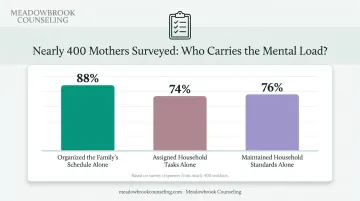
A survey of nearly 400 mothers found:
- 88% said they alone organized the family's schedule
- 74% said they alone assigned household tasks
- 76% said they alone maintained household standards
Greater imbalance was linked directly to lower relationship satisfaction.
Loss of Physical and Emotional Intimacy
Physical recovery, hormonal shifts, and sheer exhaustion put intimacy on the back burner, and many couples go months without a real conversation about it. This is temporary, but it doesn't fix itself on its own. It needs intention, whether that's scheduling time to reconnect or simply naming what's changed out loud.
Postpartum Mood Changes
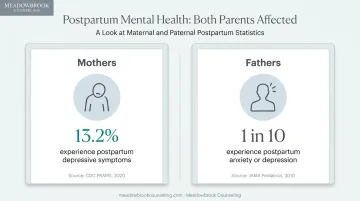
Perinatal mood disorders affect both partners:
- 13.2% of women reported postpartum depressive symptoms in a CDC analysis of 2018 data
- Roughly 1 in 10 fathers experience postpartum depression or anxiety, according to Postpartum Support International
Left unaddressed, either partner's struggle can strain the whole relationship.
Mismatched Parenting Styles and Boundary Issues
Differing views on discipline, screen time, or how involved grandparents should be can create friction fast, especially when neither partner realized how differently they were raised. One parent's "firm but fair" might look like strict rule-following to the other, and neither is wrong.
These patterns are common, but they don't have to define the relationship long-term. Naming them is often the first step toward working through them together, whether on your own or with support from a couples therapist.
How Couples Counseling Helps New Parents Reconnect
Couples therapy isn't just talking about problems. It's structured, and it works.
A 2020 meta-analysis of 2,092 couples found a large improvement in relationship satisfaction following couples therapy (Hedges g = 1.12), compared to almost no improvement for couples who didn't get treatment. The same research found gains in communication and emotional intimacy that tended to stick around after treatment ended.
What a Good Therapist Actually Does
- Neutral, structured space: a trained therapist mediates without judgment, so both partners feel heard instead of escalating at home
- Practical tools: techniques like active listening and structured check-ins help partners express needs without blame
- Normalized struggle: hearing "this is common" alone reduces shame and defensiveness
- Realigned expectations, giving couples a forum to negotiate division of labor instead of assuming
- Support for mental health as a couple, since therapists can flag signs of perinatal mood disorders and coach the other partner on how to help without feeling helpless
Evidence-Based Approaches
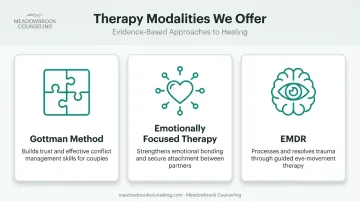
These techniques come from specific clinical models. Many therapists lean on the Gottman Method, which uses structured assessment and targeted interventions around trust, conflict management, and emotional connection. Others integrate EMDR when past trauma is fueling current conflict patterns.
Meadowbrook Counseling's therapists train across several of these modalities, including Gottman Method principles, Emotionally Focused Therapy, and EMDR. Couples get matched to the approach that fits their situation, not a one-size-fits-all script.
When Should New Parents Consider Starting Counseling?
You don't need to hit a breaking point before booking a session.
Signs it might be time:
- Arguments that keep repeating without resolution
- Feeling more like co-managers of a household than partners
- Intimacy that's disappeared and isn't coming back on its own
- One partner showing signs of postpartum depression or anxiety
Preventative vs. Reactive Therapy
Starting counseling during pregnancy or early postpartum, before conflict patterns set in, can help build resilience early. Research on structured prevention programs for first-time parents points to real benefits for coparenting and adjustment. Starting early gives couples tools before old patterns take hold.
That said, there's no evidence that waiting until things get "bad enough" produces better outcomes. If anything, distressed couples who don't get support tend to stay distressed.
Seeking counseling doesn't mean your relationship is failing. Most couples benefit from it regardless of where they're starting from.
Meadowbrook Counseling offers both in-person and telehealth sessions, so getting started fits around a newborn's schedule rather than the other way around.
Finding the Right Couples Therapist for This Season of Life
Not every couples therapist has experience with the specific chaos of new parenthood. Look for someone who does.
Questions worth asking a prospective therapist:
- How much of your caseload involves couples navigating pregnancy or the first postpartum year?
- What's your approach to screening for postpartum depression or anxiety?
- How do you help couples divide labor and negotiate parenting differences?
- Which therapy models do you use, and why do you think they'd fit us?
Meadowbrook Counseling simplifies this search with a dedicated intake team that matches couples with a therapist suited to their needs and verifies insurance benefits before the first session. That means no guessing about costs and no wasted first appointment with the wrong fit.
Coverage matters too: Meadowbrook accepts major insurance carriers, including Aetna, Blue Cross Blue Shield, Cigna, UnitedHealthcare, Medicaid, and TriCare. Both in-person and telehealth appointments are available, which helps when childcare logistics make getting to an office difficult.
Small Steps Couples Can Take Between Sessions
Therapy works better when it's reinforced at home. A few small habits go a long way:
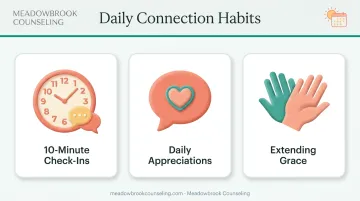
- Schedule brief, distraction-free check-ins: even 10 minutes without phones, focused on feelings instead of the day's logistics, can rebuild connection
- Name specific appreciations out loud daily — counters the brain's tendency to fixate on what's going wrong
- Extend grace during high-stress moments, remembering that exhaustion, not malice, is usually behind the sharp tone
None of these require extra time you don't have. They require intention. Building that intention is exactly the work Meadowbrook Counseling's couples therapists help new parents practice, one small habit at a time.
Frequently Asked Questions
Is it normal to have relationship problems after having a baby?
Yes, it's extremely common. Sleep loss, identity shifts, and new responsibilities create strain for nearly all couples. It doesn't mean your relationship is failing.
How soon after having a baby should couples consider therapy?
There's no such thing as too early. Couples can benefit from therapy during pregnancy, in the early postpartum months, or even before trying to conceive.
What is the #1 problem that most couples bring to therapy?
Communication breakdown is the most common issue, often surfacing as arguments over small logistical matters that mask deeper feelings of being unseen or unsupported.
Can couples therapy help if only one partner is struggling?
Yes. Therapy still helps both partners understand each other better and adjust as a team, even if only one person is in visible distress.
Does insurance cover couples counseling?
Coverage varies by plan and provider. Meadowbrook Counseling helps verify insurance benefits before the first session, so couples know their costs upfront.
How long does it typically take to see results from couples counseling?
Many couples notice improved communication within a few sessions. Deeper, longstanding patterns usually take longer, often several months of consistent work.